38. The US had managed to raise an army to the European theatre, after hearing how men were desperately needed, through hurried conscription. An interesting detail during WWI, was the use of women and blacks in the armed forces for the first time.

America Helps Hammer the Hun:
39. Pershing led the first all-American force in WWI on the gigantic Meuse-Argonne offesive. The purpose of the offesive was to cut German railroad lines, and became the biggest battle in American history thus far, lasting 47 days, and involving 1.2 million Americans. American casualties in this battle mounted to around 120,000.
40. Sergeant York was a Tennessean, and ironcially a member of an anti-war religious sect, who became famous by single-handedly killing 20 Germans, and capturing 132 others.
The Fourteen Points Disarm Germany:
41. Germany had sought a peace based on Wilson's reasonable Fourteen Points.
42. The US's main contribution to the war effort came in the form of food, munitions, oil, and manpower. The Germans meanwhile had become disorientated, not by America's military performance, but by the prospect of endless American reserves.
Wilson Steps Down from Olympus:
43. No other man, besides Wilson, had ever occupied so dizzy a pinnacle as moral leader of the world, however, Wilson had begun to lose the sureness of his touch, and began to fumble.
44. Wilson had gone to Europe a "diminished leader" because he did not command a legislative majority back home, due to a narrow Republican Congressional majority.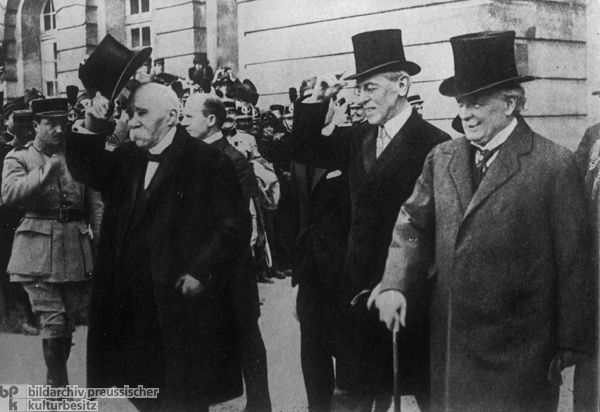
45. Wilson snubbed the Republicans by deciding to go to Europe to personally negotiate a peace. Although the Republicans were annoyed at this, the real problem was that Wilson neglected to include one Republican senator in his entourage. One reason was because the logical choice, chairman of the Senate Committee on Foreign Relations, Henry Cabot Lodge was detested by Wilson, and the feeling was poisonously mutual.
And now bloggers, I shall leave you now, but fear not, my esteemed classmate Jackie, will give you a in-depth summary of the exhausting peace effort to this "war to end war" (though WWII was far worse, and more interesting to boot).

No comments:
Post a Comment